Rooted in the art of sword fighting, fencing transforms combat into competition, where athletes use blades to score points by striking specific target areas on their opponent’s body. The sport blends lightning-fast reflexes with precision, patience, and strategy, often described as physical chess.
Fencing in the Olympics
Fencing was one of the original sports contested at the inaugural Athens 1896 Olympic Games, making it one of only five sports to have been contested at every Olympic Games.
In the early years of the Games, fencing was dominated by Italy, France, and Hungary, but American fencing athletes soon began making their mark.
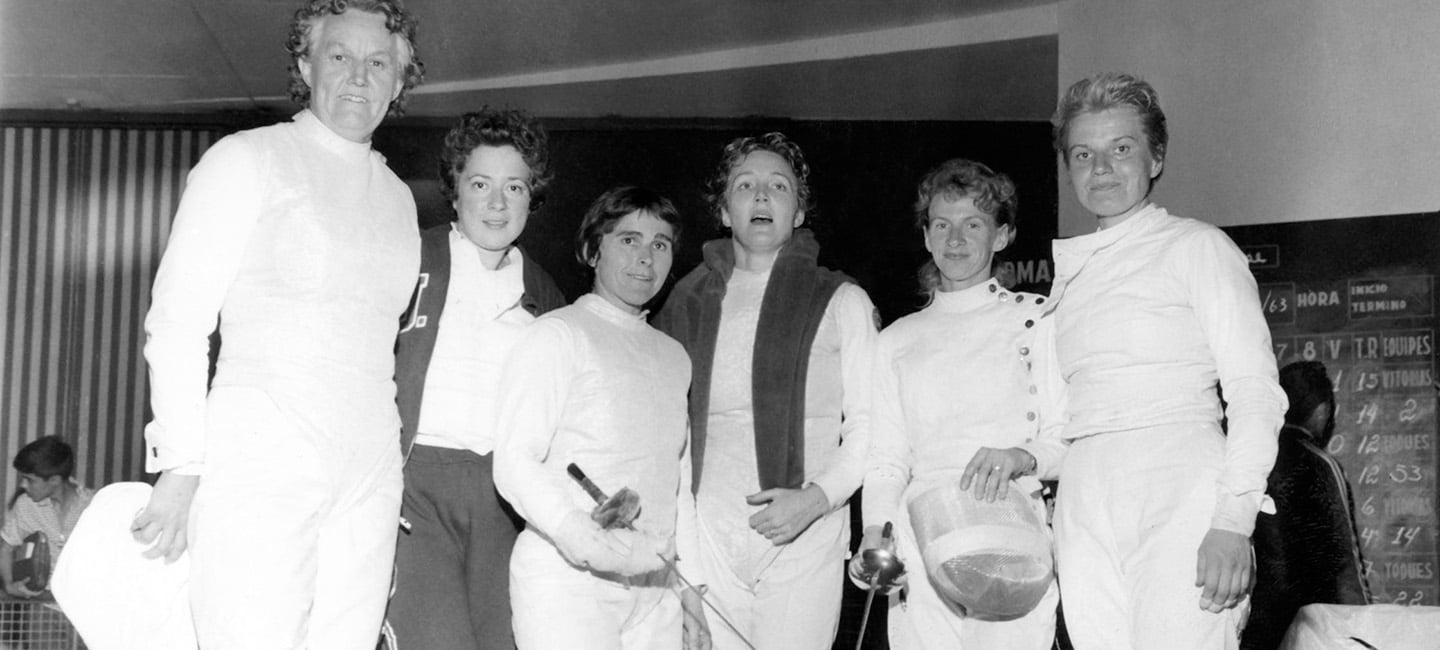
Women first stepped onto the Olympic fencing stage at the Paris 1924 Olympic Games, competing only in foil., Women’s epee was introduced at the Atlanta 1996 Olympic Games, and women’s sabre joined the program in the Athens 2004 Olympic Games.
The Three Weapons of Olympic Fencing
Foil: A lightweight weapon focused on precision and technique, targeting the torso.
Épée: The heaviest weapon, where the entire body is a valid target
Sabre: The fastest and most aggressive weapon, allowing competitors to score with both the edge and tip of the blade, targeting everything above the waist.
About Olympic Fencing Competitions
Individual Competition
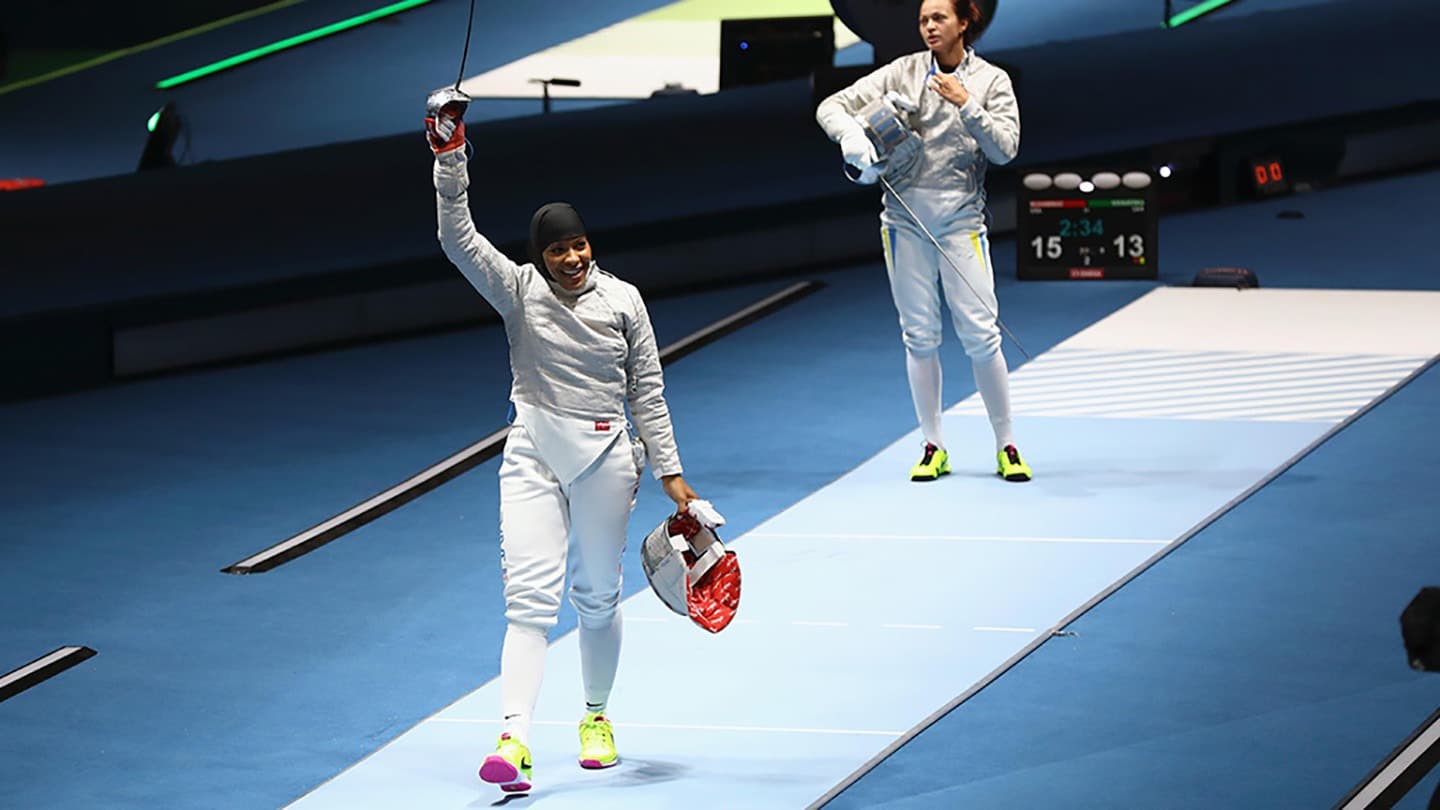
The winner is the first to score 15 touches on the opponent.
Matches last up to nine minutes, divided into three periods of three minutes.
If neither fencer reaches 15 touches before time runs out, the one with the higher score wins.
Team Competition
Matches consist of nine individual bouts, with each fencer on one team facing every fencer on the other.
Each bout lasts three minutes or until the team’s total score reaches the next multiple of five.
Olympic Fencing Champions from Team USA
While European nations have long dominated the medal tables, Team USA continues to rise as a global contender.
Albert Van Zo Post
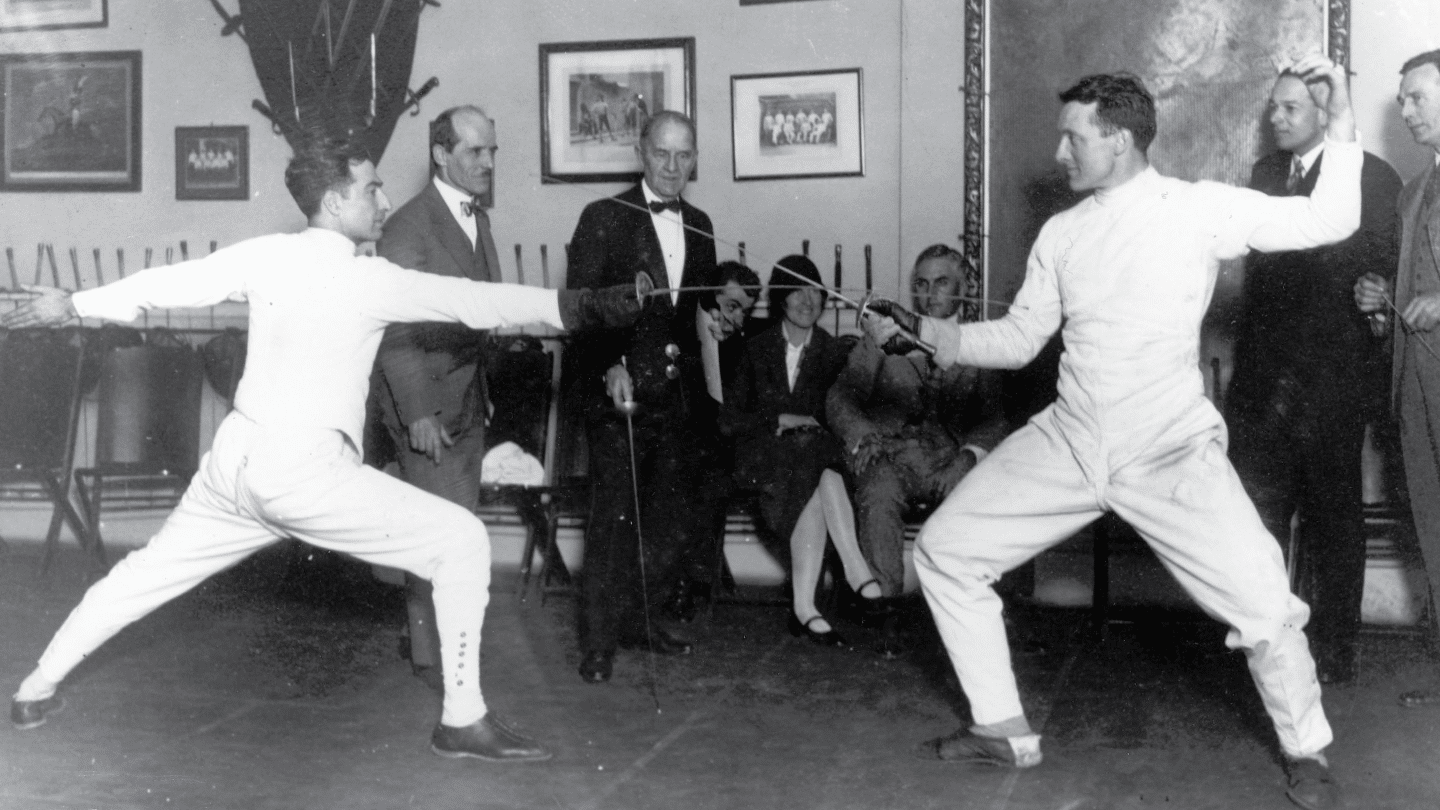
In the St. Louis 1904 Olympic Games, Post won five fencing medals, including a gold medal in single-sticks, which was never contested again at the Olympic Games. He remains the only American man ever to win Olympic gold in fencing.
Lee Kiefer
Made history at the Tokyo 2021 Olympic Games as the first American fencer to win gold in individual foil. In 2024, she became the first U.S. fencer to earn three Olympic gold medals (one in 2020 and two in 2024).
Lauren Scruggs
A U.S. fencer who won a silver medal in women’s individual foil at the Paris 2024 Olympic Games, making her the first Black American woman to win an individual fencing medal.
Mariel Zagunis
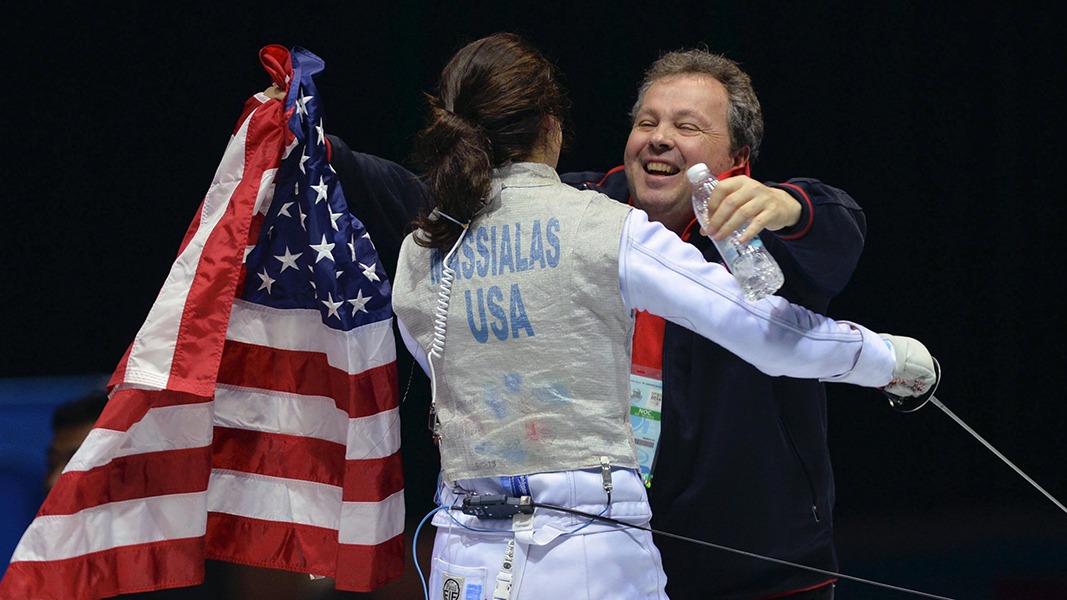
The first American fencer in 100 years to win Olympic gold and the first woman to carry the U.S. flag at an Olympic Opening Ceremony (2004). She captured back-to-back gold medals in sabre in 2004 and 2008.
Wheelchair Fencing in the Paralympics
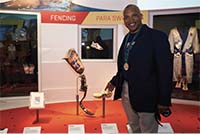
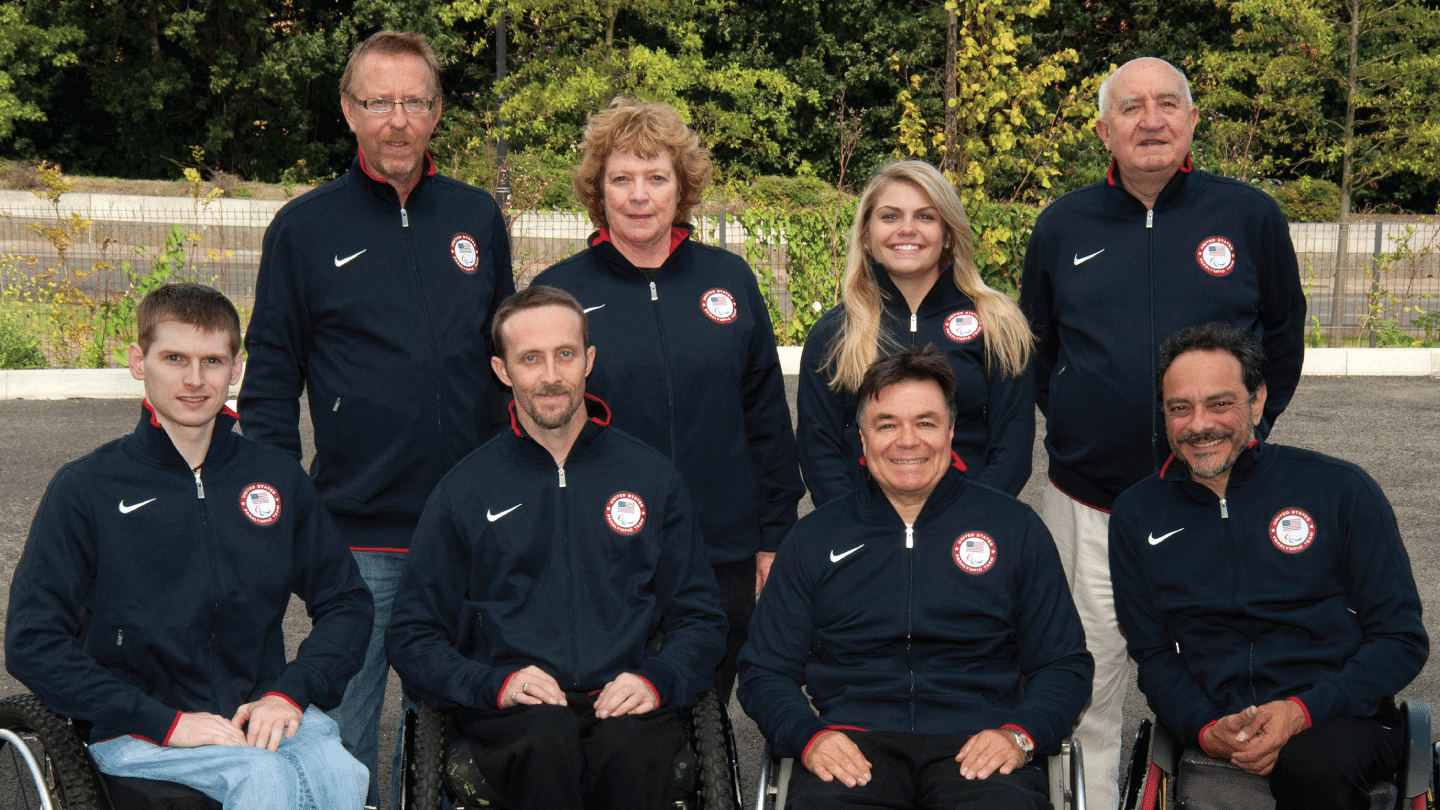
Introduced at the 1960 Rome Paralympic Games, wheelchair fencing brings the same passion and precision to adaptive sport. Athletes compete from fixed chairs, showcasing incredible upper-body control, speed, and tactical awareness.
About Paralympic Wheelchair Fencing Competitions
Athletes compete using the same three weapons as in Olympic fencing: foil, épée, and sabre. Men and women select their weapon of choice and face off in intense, fast-paced bouts.
In early rounds (Poules), fencers compete to five touches.
In knockout rounds (Direct Elimination), bouts go to 15 touches, just like in Olympic competition.
Today, wheelchair fencing is a part of the Paralympic Games every four years, and continues to evolve, expanding access to one of the oldest Olympic disciplines.
Paralympic Wheelchair Fencing Champions from Team USA
Ellen Geddes
A two-time Olympian (2020, 2024) and five-time World Championship team member. She earned a bronze medal at the World Cup in Hungary and won gold at the 2024 Wheelchair Fencing Americas Championship.
Lauryn DeLuca
DeLuca was the youngest fencer at the 2016 Rio Paralympic Games and was the first wheelchair fencer in NCAA history.
From the historic sabres of early Olympians to the speed of today’s fencers, the Olympic and Paralympic sport continues to blend artistry and athleticism.
Explore More Olympic & Paralympic Legends
Dive deeper into the stories of athletes who changed history.