




SPORTS
Olympic Decathlon | Team USA Athletes, Events & History

Share

DECATHLON

What is a Decathlon

The decathlon is track and field’s most rigorous event and the ultimate test of versatility: 10 events, two days, one athlete, with the highest cumulative score across all 10 events determining the winner. Ever since its Olympic debut, the decathlon champion is often referred to as the “World’s Greatest Athlete,” a title earned only by mastering sprinting, jumping, throwing, and distance running.

History of Decathlon

The decathlon traces its roots to the ancient Greek pentathlon, a five-event competition of footrace, long jump, discus, javelin, and wrestling. In the late 19th century, American track and field organizations began staging all-around competitions that tested athletes across multiple disciplines, helping lay the groundwork for the modern decathlon.

Decathlon in the Olympics

The modern 10-event decathlon is one of the combined events in Olympic track and field that debuted as a men’s-only event at the Stockholm 1912 Olympic Games, consisting of 10 disciplines that athletes complete over three days.

Women debuted in the five-event pentathlon at the Tokyo 1964 Olympics, which was updated to the modern heptathlon at the Los Angeles 1984 Olympic Games. Currently, only men compete in the 10-event decathlon while women compete in the seven-event heptathlon.

The scoring system has evolved considerably since 1912 and has been revised several times. The current system has been in place since 1984, in which athletes earn points based on performance, and the competitor with the highest cumulative score after all 10 events wins.

Decathlon Disciplines: 10 Events in 2 Days

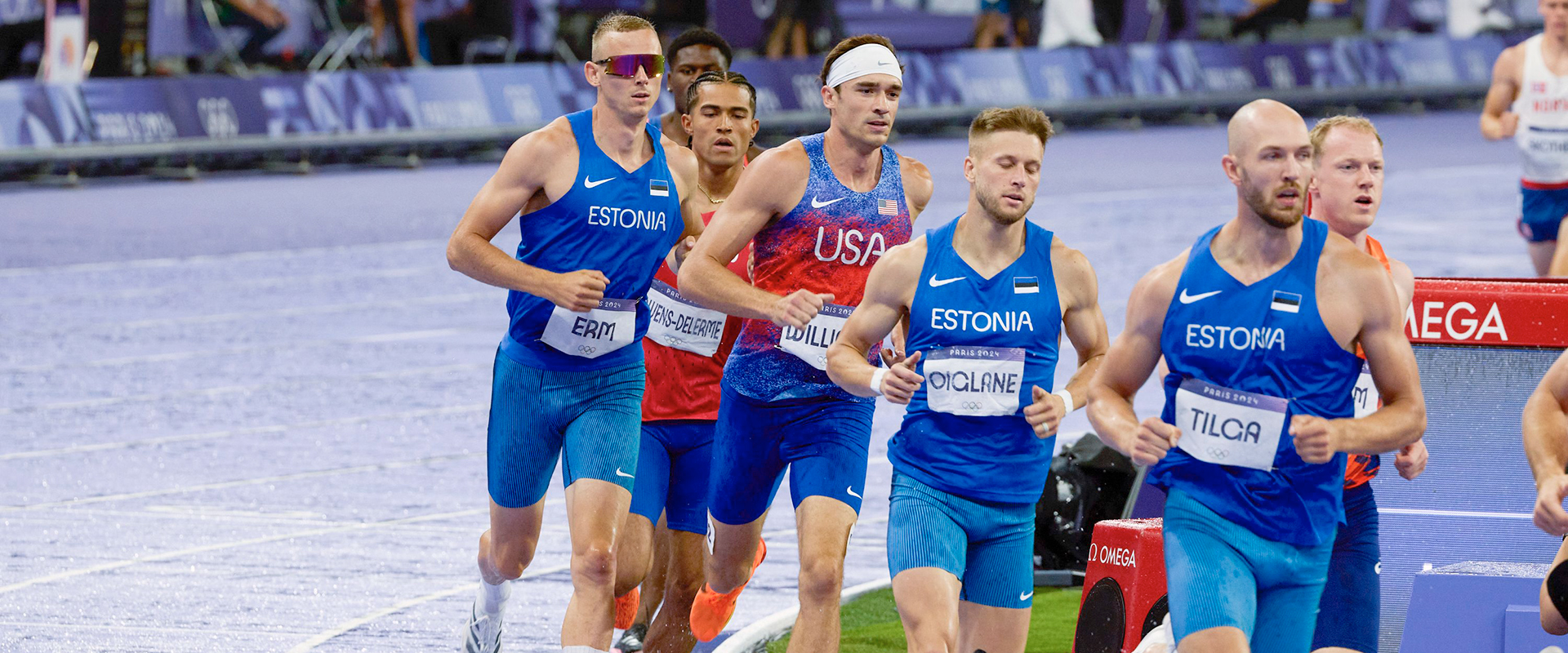
Day one favors speed and power, while day two shifts toward technical precision and endurance, ending with the grueling 1,500-meter run.

Day 1

  • 100-Meter Dash — a straight sprint. The fastest time wins.
  • Long Jump — a run down the runway, then a leap and landing in the sandpit. The farthest horizontal jump wins.
  • Shot Put — a one-handed throw of a 16-pound metal ball. The farthest throw wins.
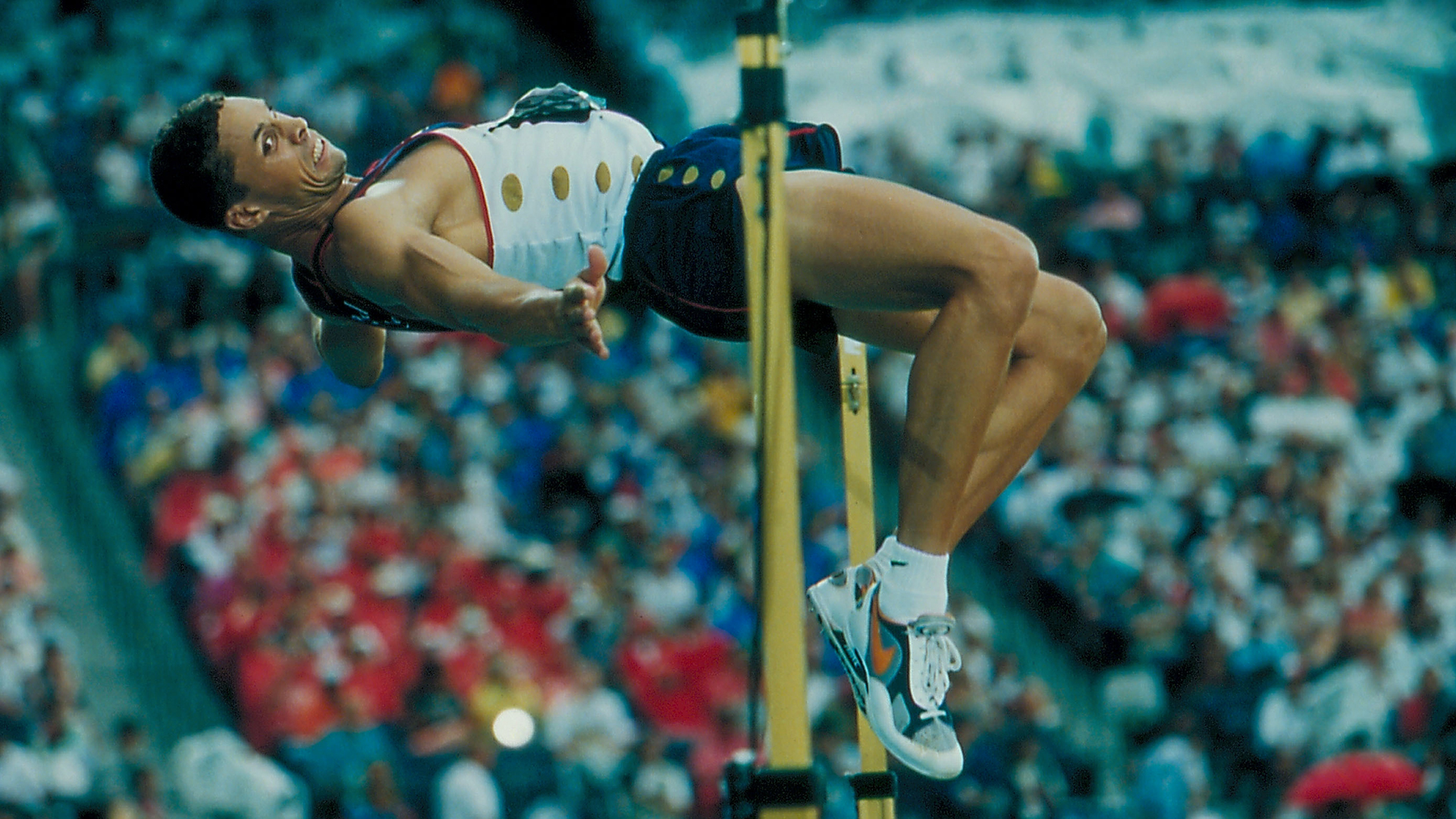
  • High Jump — a vertical leap over a raised bar. The highest jump without knocking the bar down wins.
  • 400-Meter Run — a one-lap sprint around the track. The fastest time wins.

Day 2

  • 110-Meter Hurdles — a sprint over 10 barriers spaced along the track. The fastest time wins.
  • Discus Throw — a rotational throw of a 4.4-pound disc. The farthest throw wins.
  • Pole Vault — a sprint-and-vault over a raised bar using a flexible pole. The jump that clears the bar at the highest point without knocking it down wins.
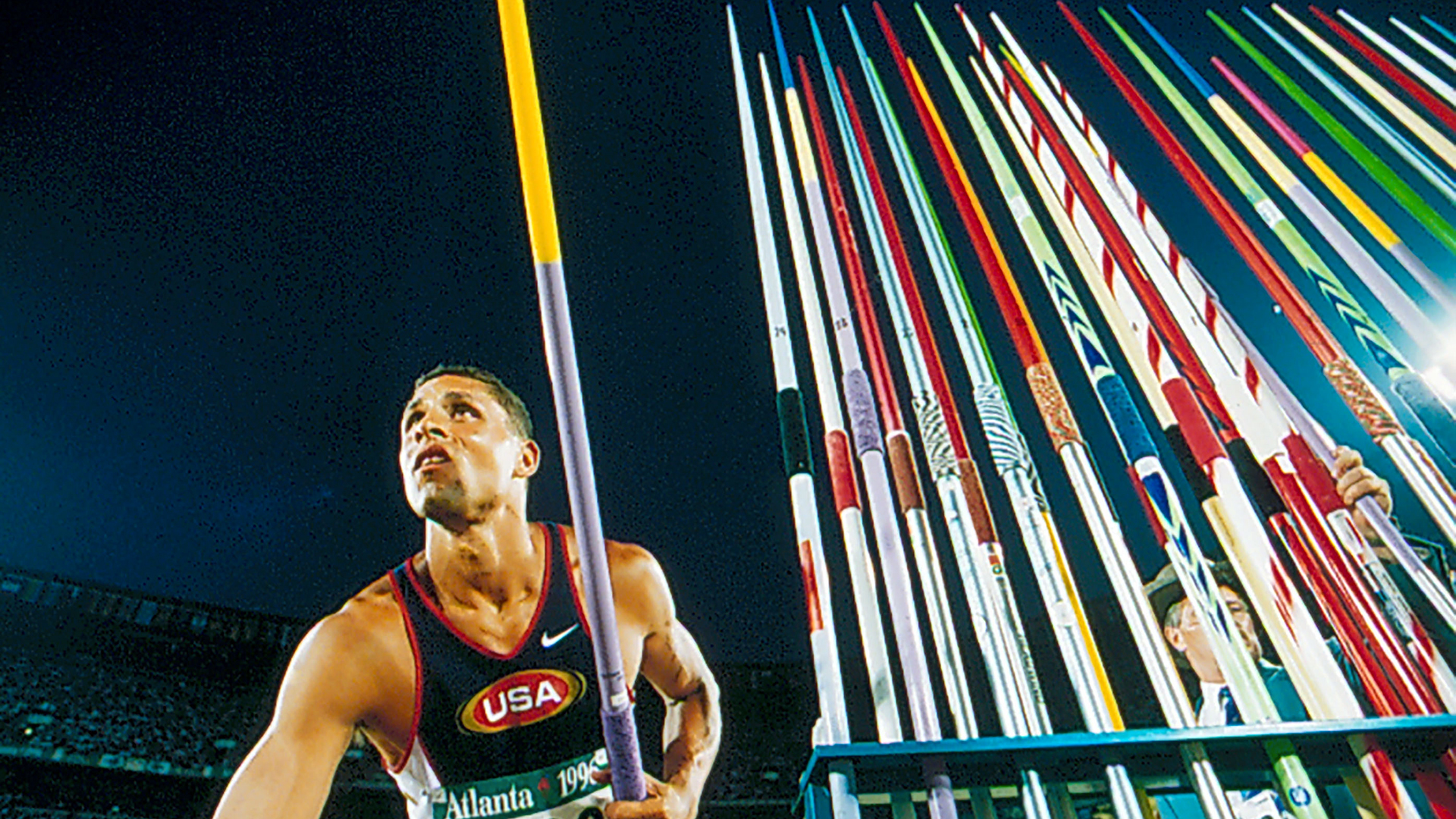
  • Javelin Throw — a running throw of a metal-tipped spear. The throw that reaches the longest distance wins.
  • 1,500-Meter Run — the “metric mile,” a middle-distance race closing out the competition. The fastest time wins.

Decathlon Points: How it Works

The decathlon scoring system has been revised several times since 1912, with the current version in place since 1984. Rather than ranking athletes by simple placements like 1st, 2nd, or 3rd, decathlon scoring converts each athlete’s performance in every discipline into a point value using mathematical formulas set by World Athletics.

Each decathlon event uses its own scoring table, converting a runner’s time in seconds, a thrower’s distance in meters, or a jumper’s height and distance in centimeters into a fixed number of points. So a fast 100-meter dash and a long javelin throw are measured on the same scale.

The 10 individual scores are added together, and the athlete with the highest combined total after all 10 events wins the gold medal.

The Legacy of Team USA in Olympic Decathlon

The Legacy of Team USA in Olympic Decathlon

The United States has one of the deepest decathlon legacies in Olympic history, producing many of the sport’s most recognized champions. Team USA’s legacy began at the Stockholm 1912 Olympic Games with Jim Thorpe and his extraordinary winning performance that prompted King Gustav V of Sweden to personally tell him, “Sir, you are the greatest athlete in the world,” a gold-medal victory that was revoked due to a technicality but later restored by the IOC, which recognized Thorpe as the sole Olympic champion in 2022, 110 years after his victory.

Bob Mathias continued that legacy, winning decathlon gold at the London 1948 Olympic Games at just 17, then became the first decathlete to win back-to-back Olympic gold at the Helsinki 1952 Olympic Games. Rafer Johnson won gold at the Rome 1960 Olympic Games after a narrow duel with training partner C.K. Yang, becoming the first Black American to carry the U.S. flag at an Opening Ceremony. Bill Toomey set an Olympic record en route to gold at the Mexico City 1968 Olympic Games.

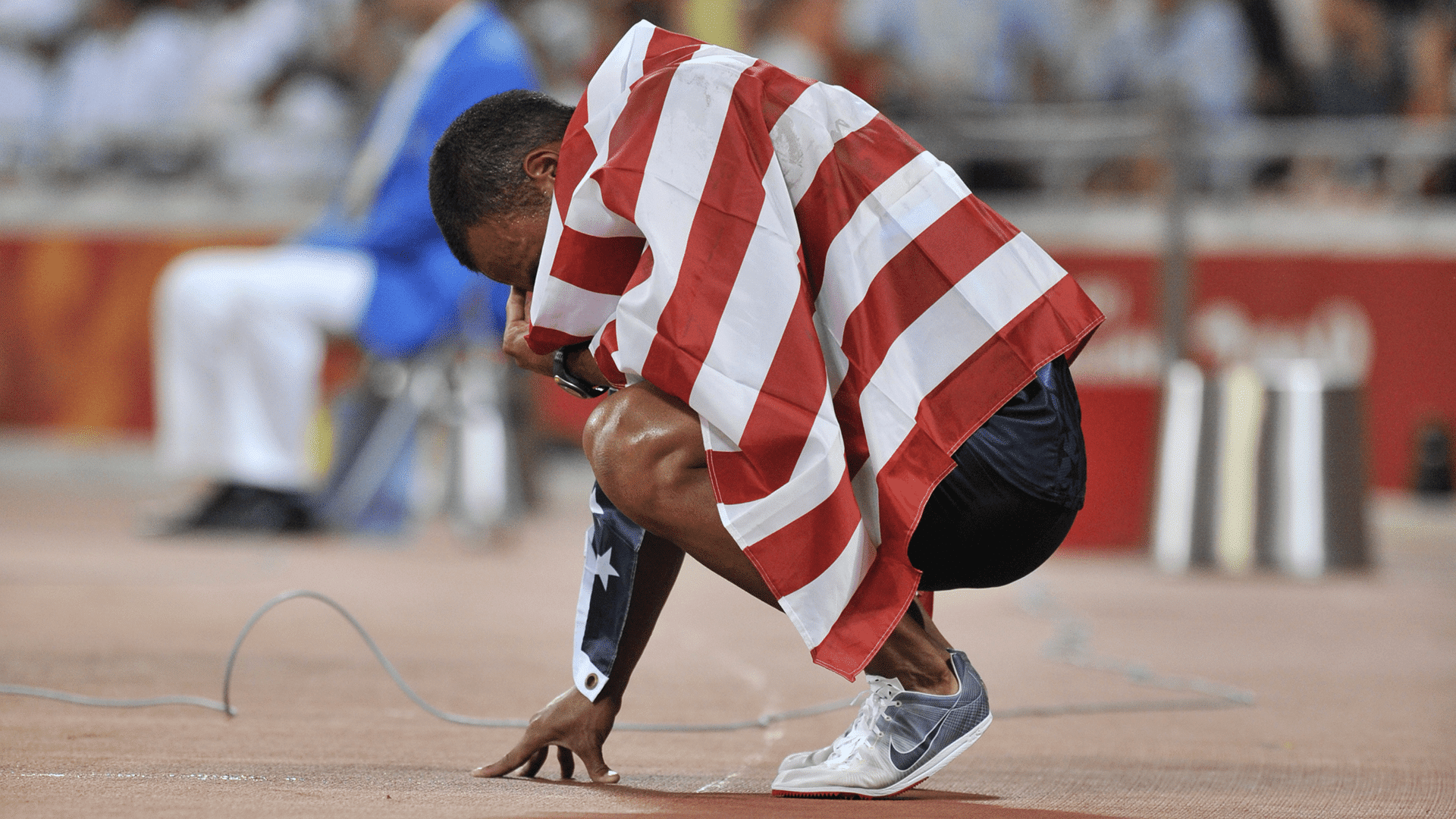
Caitlyn Jenner, formerly Bruce Jenner, carried that legacy into the next generation, setting a world record on his way to gold at the Montreal 1976 Olympic Games. Modern icons like Dan O’Brien, who won gold at the Atlanta 1996 Olympic Games, and Bryan Clay, who followed with a silver at Athens 2004 and gold at the Beijing 2008 Olympic Games, kept Team USA atop the podium. At the 2012 U.S. Olympic Trials, Ashton Eaton set world records in the 100 m and long jump events of the decathlon.

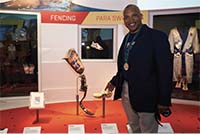
These decathlete legends and their record-setting performances are honored today in the U.S. Olympic & Paralympic Museum, where their stories continue to inspire the next generation of American athletes.

Fun Facts About Olympic Decathlon

  • The decathlon’s champion has long carried the unofficial title of “World’s Greatest Athlete.”
  • Decathletes compete across two full days, meaning fatigue management is as much a part of strategy as athletic skill.
  • Because scoring spans 10 distinct disciplines, a decathlete rarely wins every individual event. The title goes to the most consistent all-around performer, not necessarily the best sprinter or thrower.

Celebrate Olympic Decathlon in the U.S. Olympic & Paralympic Museum

The U.S. Olympic & Paralympic Museum is Olympic City’s official hub for celebrating Team USA athletes who bring America’s legacy to the international sports stage.

Explore the U.S. Olympic & Paralympic Hall of Fame, honoring years of American athletes who defined the test of speed, power, and endurance at the Games. Or choose one of the interactive sport demonstrations in the Athlete Training gallery to learn about the training required of Team USA athletes.

Plan your visit to the top sports attraction in Colorado Springs, and discover the accomplishments, stories, and legacies behind Team USA’s decathlon athletes.

Test Your Knowledge: Olympic Decathlon

Question 1 of 2

Which event closes out the decathlon on Day 2, often called the "metric mile"?

What nickname has been given to the decathlon's Olympic champion since the event's earliest days?

Notable Moments in Olympic Cycling & Para Cycling

Explore Hall of Fame Athlete By Sport

Frequently Asked Questions

Skip to content