



Olympians & Paralympians Who Served in the U.S. Military

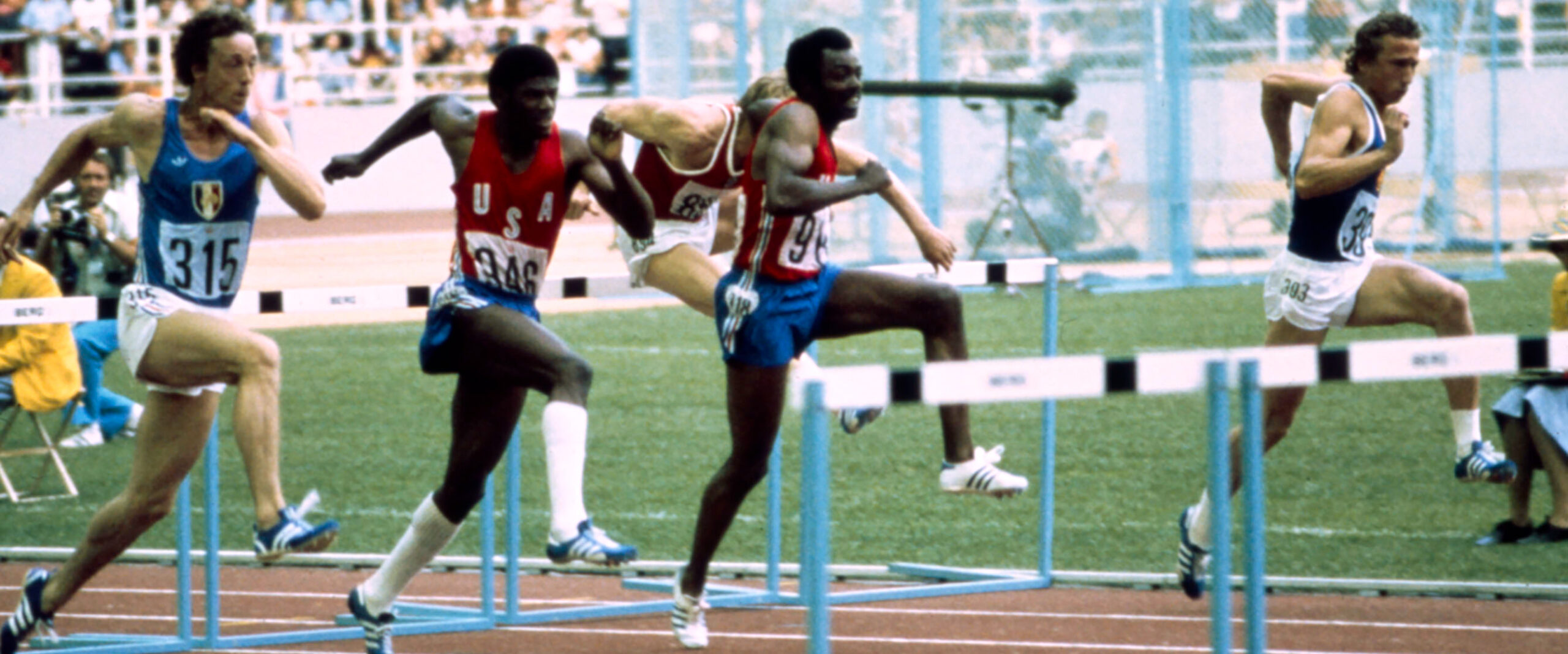
Willie Davenport for Team USA - Montreal 1976 Olympic Games

For more than a century, U.S. service members have traded one uniform for another and competed for Team USA. This Veterans Day, we celebrate not only the brave men and women who serve our country but also those who’ve represented the United States on the world’s biggest athletic stage.

Charley Paddock sprinted at the Antwerp 1920 Olympic Games between two world wars. Brad Snyder won gold at the London 2012 Paralympic Games one year to the day after an IED blast in Afghanistan took his sight. Some of these athletes trained between deployments. Others found their sport during rehabilitation. Here are their stories.

At a Glance: Team USA Athletes Who Served in the Military

Team USA Olympians and Paralympians who served in the U.S. military, with branch, sport and Games.
Athlete Branch Sport Games
Charley Paddock Army, Marine Corps Track and field Antwerp 1920, Paris 1924 and Amsterdam 1928 Olympic Games
Jack Kelly Sr. Army Rowing Antwerp 1920 and Paris 1924 Olympic Games
Eddie Eagan Army Boxing, bobsled Antwerp 1920 Olympic Games and Lake Placid 1932 Olympic Winter Games
John Woodruff Army Track and field Berlin 1936 Olympic Games
Louis Zamperini Army Air Corps Track and field Berlin 1936 Olympic Games
Harrison Dillard Army Track and field London 1948 and Helsinki 1952 Olympic Games
John Davis Army Weightlifting London 1948 and Helsinki 1952 Olympic Games
Mal Whitfield Air Force Track and field London 1948 and Helsinki 1952 Olympic Games
Sammy Lee Army Diving London 1948 and Helsinki 1952 Olympic Games
Bob Mathias Marine Corps Decathlon London 1948 and Helsinki 1952 Olympic Games
Tommy Kono Army Weightlifting Helsinki 1952, Melbourne 1956 and Rome 1960 Olympic Games
Milt Campbell Navy Decathlon Helsinki 1952 and Melbourne 1956 Olympic Games
Billy Mills Marine Corps Track and field Tokyo 1964 Olympic Games
Willie Davenport Army Track and field, bobsled Tokyo 1964, Mexico City 1968, Munich 1972 and Montreal 1976 Olympic Games; Lake Placid 1980 Olympic Winter Games
Lones Wigger Jr. Army Shooting Tokyo 1964, Mexico City 1968 and Munich 1972 Olympic Games
Micki King Air Force Diving Mexico City 1968 and Munich 1972 Olympic Games
David Robinson Navy Basketball Seoul 1988, Barcelona 1992 and Atlanta 1996 Olympic Games
Shauna Rohbock Army National Guard Bobsled Torino 2006 and Vancouver 2010 Olympic Winter Games
Vincent Hancock Army Shooting Beijing 2008, London 2012, Rio de Janeiro 2016, Tokyo 2020 and Paris 2024 Olympic Games
Glenn Eller Army Shooting Sydney 2000, Athens 2004, Beijing 2008, London 2012 and Rio de Janeiro 2016 Olympic Games
Sam Kendricks Army Reserve Track and field Rio de Janeiro 2016 and and Paris 2024 Olympic Games
Bill Hovanic Army Para alpine skiing, Para Nordic skiing Örnsköldsvik 1976 Paralympic Winter Games
John Register Army Para swimming, Para track and field Atlanta 1996 and Sydney 2000 Paralympic Games
Angela Madsen Marine Corps Para rowing, Para track and field Beijing 2008, London 2012, and Rio de Janeiro 2016 Paralympic Games
Oz Sanchez Marine Corps Para cycling Beijing 2008, London 2012, and Rio de Janeiro 2016 Paralympic Games
Andy Soule Army Para Nordic skiing, Para biathlon Vancouver 2010, Sochi 2014, and PyeongChang 2018 Paralympic Winter Games
Melissa Stockwell Army Para swimming, paratriathlon Beijing 2008, Rio de Janeiro 2016, Tokyo 2020 and Paris 2024 Paralympic Games
Rico Roman Army Sled hockey Sochi 2014, PyeongChang 2018 and Beijing 2022 Paralympic Winter Games
Josh Sweeney Marine Corps Sled hockey Sochi 2014, Beijing 2022 and Milano Cortina 2026 Paralympic Winter Games
Dan Cnossen Navy Para Nordic skiing Sochi 2014, PyeongChang 2018, Beijing 2022 and Milano Cortina 2026 Paralympic Winter Games
Brad Snyder Navy Para swimming, paratriathlon London 2012, Rio de Janeiro 2016 and Tokyo 2020 Paralympic Games
Andre Shelby Navy Para archery Rio de Janeiro 2016 and Tokyo 2020 Paralympic Games
Elizabeth Marks Army Para swimming Rio de Janeiro 2016, Tokyo 2020 and Paris 2024 Paralympic Games

What Military Service and Elite Sport Share

Jack Kelly Sr. | U.S. Olympic Rower & Two-Time Gold Medalist

The discipline and drive required to serve in the military and succeed in athletics share similar characteristics. Many active-duty and veteran U.S. service members have enjoyed Olympic and Paralympic success through the years.

Dan Cnossen, a former U.S. Navy SEAL who has competed at four Paralympic Winter Games, from Sochi 2014 to Milano Cortina 2026, saw the overlap firsthand.

“There are many parallels,” Cnossen said. “The number one difference is I’m not putting my life on the line. But I’m representing the United States, and there’s the importance of discipline, being part of a team, fitting into a larger structure, knowing your role, taking care of yourself. These broad concepts exist in both.”

Cnossen said he looks at his daily training plan – conditioning, strength training, stretching, nutrition and more – as his orders to follow.

“I’ve been following it for eight or nine years at this point, so it does make you feel like you’re in the military again,” he said. “For many veterans, there is the question: What’s next? Physical fitness and setting a goal can provide some structure. I’ve really benefited from the Paralympic organization. If it did not exist, I have no idea what I’d be doing and wouldn’t be nearly as fulfilled.”
Cnossen is far from alone. The Army World Class Athlete Program and Air Force World Class Athlete Program help service members train for the Olympic and Paralympic Games while they serve.

Olympians Who Served in the U.S. Military

These Team USA athletes served before, between or after their Olympic careers. Many are U.S. Olympic & Paralympic Hall of Fame inductees.

Charley Paddock

Charley Paddock served in the U.S. Army in World War I before he became one of the fastest sprinters of his era. He competed at three Olympic Games, starting with the Antwerp 1920 Olympic Games, and won two gold and two silver medals. He returned to uniform with the U.S. Marine Corps in World War II and died in a military plane crash during the war. Read his story.

Jack Kelly Sr.

Rower Jack Kelly Sr. served three years in the U.S. Army during World War I and later won three gold medals at the Antwerp 1920 and Paris 1924 Olympic Games.

Eddie Eagan

A U.S. Army artillery lieutenant during World War I, Eddie Eagan won gold in boxing at the Antwerp 1920 Olympic Games and in bobsled at the Lake Placid 1932 Olympic Winter Games. He is the only person to win Olympic gold at both the Summer and Winter Games in different sports.

John Woodruff

John Woodruff won a gold medal in the 800-meter run at the Berlin 1936 Olympic Games and later served in World War II and the Korean War.

Louis Zamperini

Louis Zamperini ran the 5,000 meters at the Berlin 1936 Olympic Games, and many expected his best years were still ahead. Instead he served in the U.S. Army Air Corps in World War II. After his plane went down in the Pacific, he drifted at sea for 47 days before Japanese forces captured him. Laura Hillenbrand told his story in the book Unbroken. 

Harrison Dillard

Harrison “Bones” Dillard put his track career on hold for three years of U.S. Army service in World War II. He served with the all-Black 92nd Infantry Division, known as the Buffalo Soldiers. He then won four gold medals across the London 1948 and Helsinki 1952 Olympic Games. He remains the only man to win Olympic gold in both the 100-meter dash and the 110-meter hurdles. Read his story.

John Davis

Weightlifter John Davis served four years in the U.S. Army during World War II, stationed in the South Pacific; he won gold at the London 1948 Olympic Games and the Helsinki 1952 Olympic Games.

Sammy Lee

Diver Sammy Lee joined the U.S. Army Reserves and served in the Korean War. He won two gold medals and one bronze at the London 1948 and Helsinki 1952 Olympic Games.

Mal Whitfield

Mal Whitfield trained with the Tuskegee Airmen in World War II and later served in the Korean War. He won the 800 meters at both the London 1948 and Helsinki 1952 Olympic Games while serving in the U.S. Air Force, and finished with five Olympic medals, three of them gold. Read his story.

Bob Mathias

Bob Mathias had never heard of the decathlon until his high school coach suggested he try it. He won it at the London 1948 Olympic Games at age 17 and defended his title at the Helsinki 1952 Olympic Games. After graduating from Stanford, he served as an officer in the U.S. Marine Corps. He later became the first director of the U.S. Olympic Training Center in Colorado Springs. Read his story.

Tommy Kono

Tommy Kono first lifted weights as a teenager at a World War II incarceration camp for Japanese Americans. During the Korean War he was drafted into the U.S. Army and was training as a cook when the Army learned he had a shot at the Olympic team. It kept him stateside. U.S. Olympic & Paralympic Hall of Fame inductee Tommy Kono (Class of 1990) won gold at the Helsinki 1952 and Melbourne 1956 Olympic Games and silver at the Rome 1960 Olympic Games. Read his story.

Milt Campbell

Milt Campbell was still in high school when he took decathlon silver at the Helsinki 1952 Olympic Games. U.S. Navy service interrupted his college career. He came back to win gold at the Melbourne 1956 Olympic Games and became the first African American Olympic decathlon champion. Read his story.

Billy Mills

Billy Mills grew up on the Pine Ridge Reservation in South Dakota. He was a first lieutenant in the Marine Corps Reserve when he lined up for the 10,000 meters at the Tokyo 1964 Olympic Games, after training at Camp Pendleton with the Marine Corps track team. Few people knew his name before the race. He surged past the leaders in the final stretch to win gold, one of the biggest upsets in Olympic history. Read his story.

Willie Davenport

Hurdler Willie Davenport was in the U.S. Army when he qualified for the Tokyo 1964 Olympic Games. He competed in three more Olympic Games, winning gold at the Mexico City 1968 Olympic Games and bronze at the Montreal 1976 Olympic Games, and later raced bobsled at the Lake Placid 1980 Olympic Winter Games.

Lones Wigger Jr.

Lones Wigger Jr. went into the U.S. Army after college and served two tours in Vietnam teaching marksmanship. He competed at the Tokyo 1964, Mexico City 1968 and Munich 1972 Olympic Games and won two gold medals and one silver. He served in the Army until 1987, retired as a lieutenant colonel, and then directed U.S. shooting teams at the Olympic Training Center. U.S. Olympic & Paralympic Hall of Fame inductee Lones Wigger Jr. (Class of 2008). Read his story or hear his family’s StoryCorps conversation.

Micki King

On her ninth dive of the 3-meter springboard at the Mexico City 1968 Olympic Games, Micki King hit her arm on the board and finished fourth. Four years later, she won gold in the same event at the Munich 1972 Olympic Games. She served as an officer in the U.S. Air Force. Read her story.

David Robinson

U.S. Naval Academy graduate David Robinson, nicknamed “The Admiral,” served two years at the Naval Submarine Base Kings Bay before embarking on a career that saw him play at the Seoul 1988, Barcelona 1992 and Atlanta 1996 Olympic Games and become one of the best professional basketball players.

Recent Olympians who serve in the U.S. Army

At the Rio de Janeiro 2016 Olympic Games, 16 service members or veterans made the U.S. team, including Vincent Hancock, a gold medalist in shooting at the Beijing 2008, London 2012, Tokyo 2020, and Paris 2024 Olympic Games, and Glenn Eller, a five-time Olympian shooter who won gold at Beijing. Bobsledder Shauna Rohbock, a member of the U.S. Army National Guard, came through the Army World Class Athlete Program. She was a two-time Olympian, won silver at the Turin 2006 Olympic Winter Games, and is now a Team USA bobsled coach.

Pole vaulter Sam Kendricks was a second lieutenant in the U.S. Army Reserve when he stopped in the middle of his approach at a competition after hearing the national anthem. He competed for Team USA at the Rio de Janeiro 2016 Olympic Games.

Test Your Knowledge: U.S. Athletes Who Served

Question 1 of 3

Which Marine Corps officer won the 10,000 meters at the Tokyo 1964 Olympic Games?

Who won gold at both a Summer Games and a Winter Games in different sports?

Who won Paralympic gold one year to the day after losing his sight in Afghanistan?

Paralympians Who Served in the U.S. Military

The Paralympic Movement traces its roots to the Stoke Mandeville Games for injured World War II veterans in 1948. Today, the U.S. Olympic & Paralympic Committee’s Paralympic Military Program, launched in 2004, uses Paralympic sport to support wounded, ill and injured service members and veterans. Nine military veterans competed for Team USA at the Milano Cortina 2026 Paralympic Winter Games, and 18 competed at the PyeongChang 2018 Paralympic Winter Games.

Melissa Stockwell, Allysa Seely and Hailey Danisewicz bit into their medals.

Dan Cnossen

Dan Cnossen was leading a Navy SEAL platoon in Afghanistan in 2009 when an IED blast cost him both legs. He found cross-country skiing and biathlon through the Paralympic Military Program. At the PyeongChang 2018 Paralympic Winter Games, he won one gold, four silver and one bronze medal. He added relay gold at the Beijing 2022 Paralympic Winter Games and raced again at Milano Cortina 2026.

Melissa Stockwell

Melissa Stockwell, a U.S. Army veteran of the Iraq War, swam at the Beijing 2008 Paralympic Games, where she carried the U.S. flag at the Closing Ceremony. She then moved to Para triathlon and won bronze when the sport debuted at the Rio de Janeiro 2016 Paralympic Games.

Brad Snyder

Brad Snyder grew up swimming off the beaches of Florida. In 2011, as a U.S. Navy explosive ordnance disposal officer in Afghanistan, he stepped on an IED and lost his sight. One year to the day later, he won the 400-meter freestyle S11 at the London 2012 Paralympic Games. He won six Paralympic gold medals in all, the last in Para triathlon at the Tokyo 2020 Paralympic Games.

Bill Hovanic

Bill Hovanic was a U.S. Army helicopter pilot in the Vietnam War when his aircraft was shot down, and he lost his right leg below the knee. He took up skiing during his recovery. At the Örnsköldsvik 1976 Paralympic Winter Games in Sweden, the first Paralympic Winter Games, he was the entire U.S. delegation. Hovanic carried the U.S. flag and his team’s sign in the Opening Ceremony.

John Register

John Register was training in the U.S. Army World Class Athlete Program with his sights on the Atlanta 1996 Olympic Games. He had twice qualified for the U.S. Olympic Track and Field Trials, in the 110-meter hurdles in 1988 and the 400-meter hurdles in 1992. Then a training accident led to the amputation of his left leg. Swimming during his rehabilitation brought him back to competition. He swam at the Atlanta 1996 Paralympic Games, then switched to track and field and won silver in the long jump, with an American record, at the Sydney 2000 Paralympic Games. He later started what is now the USOPC Paralympic Military Program.

Angela Madsen

Angela Madsen served in the U.S. Marine Corps and went on to compete at three Paralympic Games from 2008-2016. She won bronze in the shot put at the London 2012 Paralympic Games. She died in 2020 during an attempt to row solo across the Pacific Ocean. Read her story.

Elizabeth Marks

Elizabeth Marks joined the U.S. Army at 17 and trained as a combat medic. She began swimming in 2011 at Brooke Army Medical Center during her recovery. In 2012 she became the first Paralympic swimmer in the Army World Class Athlete Program. She set a world record to win gold at the Rio de Janeiro 2016 Paralympic Games. She also won five silver medals at the Paris 2024 Paralympic Games and was a co-flag bearer at the Closing Ceremony.

Andre Shelby

Andre Shelby had never shot a bow when a motorcycle accident ended his 18-year career in the U.S. Navy. He tried archery during adaptive sports rehabilitation and was soon hooked. He entered the compound open tournament at the Rio de Janeiro 2016 Paralympic Games as the 12th seed and won gold by a single point, scoring a 10 with his final arrow. Read his full story.

Josh Sweeney, Rico Roman, & Jen Lee

Army veteran Rico Roman had barely been on ice when an IED in Iraq cost him his left leg in 2007. During his recovery at Brooke Army Medical Center, he took up sled hockey. Marine Corps Sgt. Josh Sweeney lost both legs in Afghanistan in 2009 and learned the sport by watching Roman. At the Sochi 2014 Paralympic Winter Games, Sweeney scored the only goal in Team USA’s 1-0 gold medal win over Russia. Army Staff Sgt. Jen Lee, the backup goaltender, was the first active-duty soldier named to a U.S. Paralympic winter team. Roman won gold again in 2018 and 2022. Sweeney added a Para Nordic relay gold at the Milano Cortina 2026 Paralympic Winter Games.

Oz Sanchez

Oz Sanchez grew up in Los Angeles and spent six years in the U.S. Marine Corps, deploying twice to the Middle East with a special operations unit. In 2001, he was transferring to the U.S. Navy to train as a Navy SEAL when a motorcycle accident injured his spinal cord. Five years later, he began racing handcycles. He went on to compete at three Paralympic Games and won six Paralympic medals, including gold. 

Andy Soule

Andy Soule was wounded while serving in Afghanistan. He took up cross-country skiing, and five years later he competed at the Vancouver 2010 Paralympic Winter Games. He became the first American to win a medal in Paralympic biathlon.

Honoring All Forms of Service This Veterans Day

This Veterans Day, the museum honors the service members and veterans who went on to compete for Team USA. Their stories begin in uniform and continue on the field of play. See their artifacts in person in Colorado Springs.

Explore More Team USA Service Member Stories

Frequently Asked Questions

Skip to content